Teach a mandolin fretboard mapping method by comparing it to piano, covering tuning, frets, chromatic movement, and interval relationships to unlock the neck.

Teach a mandolin fretboard mapping method by comparing it to piano, covering tuning, frets, chromatic movement, and interval relationships to unlock the neck.
Explain how learning Hendrix’s Little Wing connected chord shapes, pentatonic scales, and fretboard visualization into movable voicings and riffs for more musical rhythm-lead guitar.

Demonstrate movable triad shapes and inversions in G to quickly find strong chord tones across the neck and make musical, usable parts.

Demonstrates five practical guitar chord tricks—adding thirds to power chords, droning bass notes, inversions, and voicing tweaks—to make progressions sound richer and more powerful.

Explain practical skills—rhythm, phrasing, and chord-tone targeting—that make jazz guitar solos sound better than just learning exotic scales, with examples and practice tips.

Share mandolin diagrams of Barry Harris drop voicings and inversions for 6th, dominant, 7b5, and diminished chords, plus clarifying notes on equivalences.

Discuss how major and minor pentatonic shapes map identically on guitar, linking modes, intervals, and fretboard visualization, with tips for moving beyond CAGED boxes.

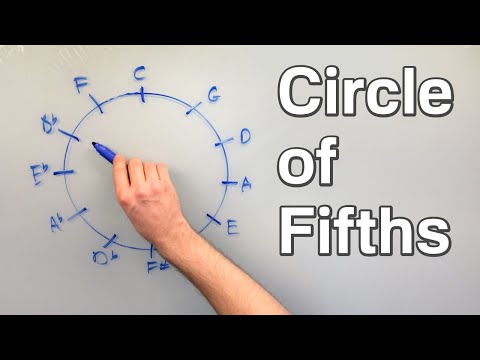
Explains and demonstrates the circle of fifths with quick memorization tips and practical uses for key signatures, chords, and modulation.
Teach a movable pentatonic pattern on mandolin to play lead lines and double-stop 'couplets' in any key, with a landmark index-finger position.

Teach mandolin arpeggios across all keys and show how to use chord tones to harmonize a melody, with exercises for speed and accuracy.

Teach beginning jazz mandolin soloing over Mack the Knife in G, using one‑octave scale notes against G6 and D7, with downloadable PDF and play‑along drills.

Explain the Nashville Number System and why thinking in numbers simplifies transposition, band communication, and ear training across keys.

Explain I–IV–V in any key on mandolin, movable chord shapes, pentatonic skip-a-fret lead patterns, blue notes, and simple double-stop positions for bluegrass leads.

Demonstrate five fretboard approaches to the major scale for comprehensive visualization, theory context, and practice, with tabs and backing tracks.

Explain and demonstrate how the five CAGED chord shapes connect across the fretboard in the key of C to map the neck.

Teach a step-by-step shape-based method to map the guitar fretboard in G major/E minor for improvising, with movable patterns and a downloadable PDF.

Demonstrates practical, advanced uses of the CAGED system for chords across the neck, minor and extended voicings, and arpeggio applications.

Teach a method to visualize the guitar neck as one unit by combining two- and three-notes-per-string pentatonic/major scale patterns, minimizing memorization.
Demonstrates how to outline chord changes in solos by finding movable chord shapes within pentatonic patterns (CAGED approach) and practicing integrating chord tones over progressions.
Teach how to improvise freely on guitar by deriving the minor pentatonic from the major scale, focusing on intervals, ear training, and practical fretboard visualization.

Explain diatonic chords in major keys using Roman numerals, how to build progressions, transpose between keys, and improve ear-based recognition.

Demonstrates a movable mandolin chord shape to play all major and minor chords, with barre-style fingering tips and guidance for clean, shiftable voicings.

Explain the CAGED system as a fretboard map, show chord-note mapping, and provide practice approaches with a free PDF.

Teach a one-minute method to build E/A-string scales, harmonize them with seventh-chord shapes, and craft math rock/post rock/emo progressions on guitar.

Teach beginners easy two-note rockabilly riffs over a 12‑bar blues, explaining chord changes by string shifts and providing a backing track for practice and improvisation.

Shows beginners how to use two-string dyads and power-chord shapes to imply chords, covering basic intervals and simple accompaniment ideas.

Teach open guitar chords from basic triads to major/minor/7th voicings, with diagrams and six play-along songs to practice them.

Survey the 24 permutations of the I-V-vi-IV 'four chords' with examples from popular music to illustrate how progression order shapes sound.

Share interval-focused guitar chord charts and theory cheat sheets, plus links to chord-finder tools, for printable practice and fretboard study.

Present a grid-based note layout to visualize whole steps, fifths, and major/minor scale shapes with enharmonic spellings and alternate semitone-shifted grids.
Teach seven ways to use pentatonic scales over jazz chords to build better licks, from simple applications to more outside sounds.

Explain chord extensions and suspensions, contrasting classical voice-leading origins with modern independent chord use, and providing practical guidance for beginners.
Shares a 36-page guitar-focused music theory reference pack, including diagrams like an expanded Circle of Fifths, for players to print and study.

Provide a curated list of 25 jazz standards with brief harmonic analyses and five essential recordings each to guide learning and listening.

Share a progressive path from intervals to drop-2 chord voicings and the circle of fifths, with exercises and learning strategies based on memory/comprehensible input.

Demonstrates essential jazz guitar chord types—minor, dominant, altered dominant, and major seventh—with quick voicings to get started.

Present a video defending the minor ninth interval beyond dominant chords, with timecoded classical, jazz, and pop examples illustrating its expressive harmonic use.

Teach beginners major arpeggio theory, interval stacking, and practical fretboard shapes to start chord‑tone soloing on lead guitar.

Explain the melodic minor scale and its seven modes, with an overview of their use in jazz improvisation and how to start applying them.

Teach how to develop playing by ear on guitar with explanations and five progressive exercises, demystifying talent myths and offering a step-by-step practice plan.

Discuss Holdsworth’s idea that Dorian is the most fundamental scale due to interval symmetry, with links to visualizations and further resources for guitarists.

Teach Steve Vai's four essential beginner-to-intermediate guitar scale shapes—major, minor, major pentatonic, and blues—with practice tips, PDF diagrams, and jam-track application.

Teaches quick shapes to play common 7th chords on guitar in under a minute, offering concise voicings as alternatives to standard barre chords.

Teach a quick formula to memorize and connect all five minor pentatonic positions on guitar for fast fretboard navigation.

Teach the CAGED system through a 90-minute hands-on guitar lesson focusing on movable C-shape chords, barre technique, and finding roots across the fretboard.

Appears to outline a three-step method for learning the CAGED system on guitar, with diagrams to map chord shapes and scales across the fretboard.

Show practical strategies for turning triads into lead guitar licks that nail chord changes and create melodic solos, with fretboard shapes and examples.

Explain the A minor pentatonic via intervals and its relationship to C major/major pentatonic to improve fretboard visualization.

Present a color-coded method to map the mandolin fretboard using three repeating patterns for major, natural minor, and altered scales, including corrected diagrams.

Share a free web-based scales and modes cheat sheet with a guide video, helping players visualize relationships and quickly reference modal and scale patterns.
Clarifies the CAGED system as a method for moving chord shapes up the neck, focusing on E/A/D-string roots to visualize chords beyond open positions.
Teach a 'Pentatonic Gear Shift' visualization to shift pentatonic shapes across string sets and map one-scale-per-chord improvisation over progressions, with practical demos.

Presents a practical jazz guitar chord system for connecting chord types and turning symbols into musical, voice-led comping without memorizing endless shapes.

Explain how mapping I–IV–V triads within CAGED shapes unlocks melodic playing across the fretboard, with examples and a handy fretboard tool link.

Teach a two-shape fretboard visualization to connect pentatonic, blues, major/melodic/harmonic scales and common arpeggio patterns across the neck, with practice guidance.

Demonstrates how beginners can turn simple ideas into convincing jazz guitar solos using vocabulary, embellishments, and phrasing.

Explain how the physics of sound underpins consonance and dissonance, showing how intervals, scales, and chords arise and why context changes perceived tension.

Demonstrates a straightforward method to convert familiar guitar shapes into colorful, playable jazz chord voicings for richer comping options.

Demonstrates how A major triad chord shapes connect to the A major scale across the fretboard to map harmony and melody.

Presents a video-based 'E-System' method to visualize the fretboard via E-string shapes, modify nucleus forms into chord types, and connect it with simple guitar syntax.

Share diagrams mapping relative and parallel modes across the guitar fretboard with mnemonics to visualize connected modal shapes and relationships.

Outline a roadmap to jazz comping on guitar using shell voicings, drop 2 and drop 3 chords, with guidance on reading chord charts.

Presents a visual diagram to help identify and connect CAGED chord shapes across the fretboard.

Appears to show an easy method to learn major and minor scale patterns across the guitar fretboard.

Provides an infographic-style overview of the Dorian mode for guitar and appears to include positions and pointers for improvising and soloing.

Demonstrates a root-focused approach to learning the five pentatonic positions, improving fretboard navigation and chord-targeted soloing across progressions.

Presents an alternative way to visualize and apply the CAGED system on guitar, likely offering a diagram of shapes and connections across the fretboard.
